


Table of Contents
Before understanding TMJ splint therapy, it is important to know what TMJ is and how it affects your jaw. Understanding the TMJ joint and the symptoms of TMJ disorder will help you better understand how splint therapy works and why it is often recommended for TMJ jaw pain and related problems.
What is splint therapy?
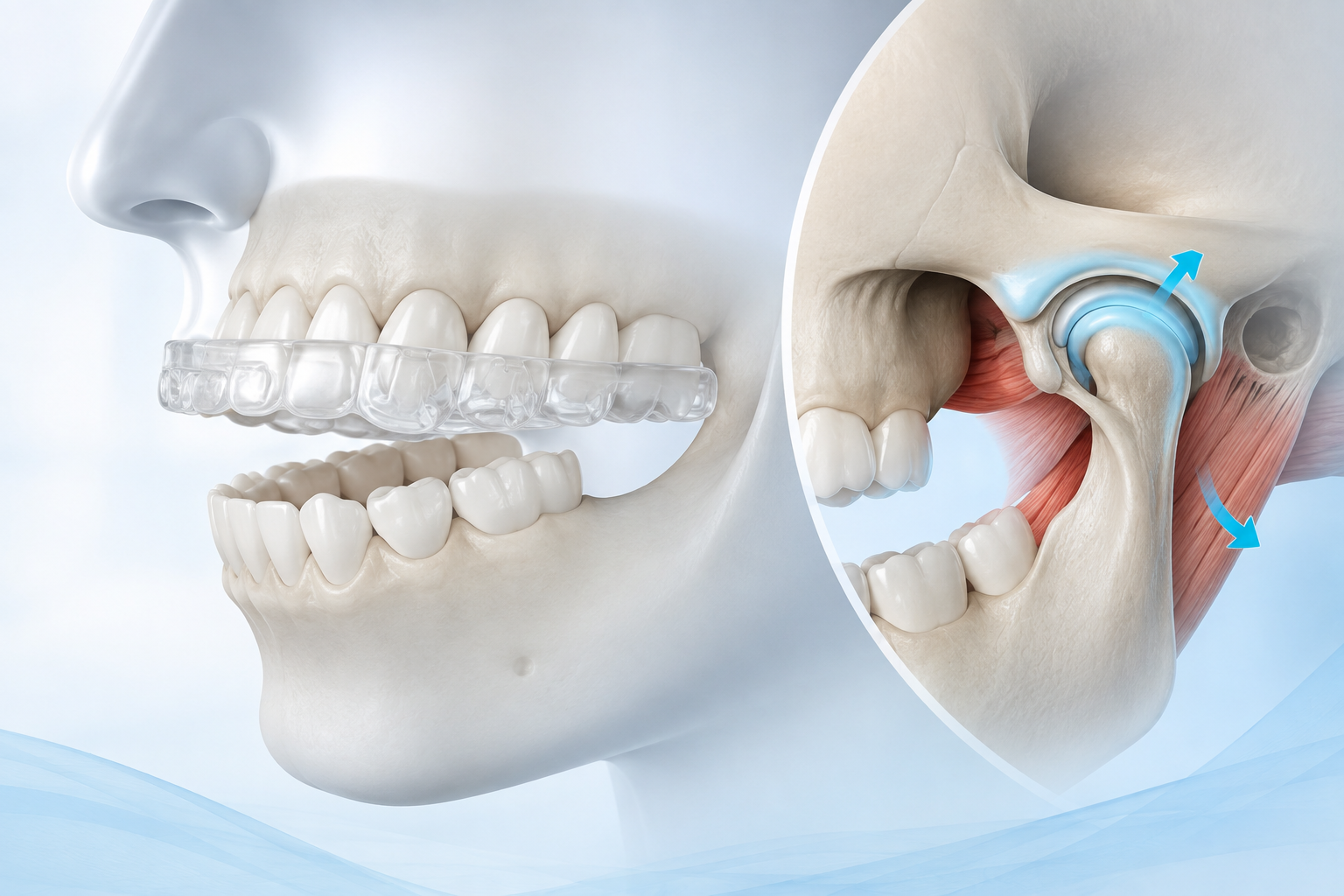
Many people have heard of TMJ splint therapy, but they are not sure what a TMJ splint is. A TMJ splint is a custom-made oral appliance that fits over your upper or lower teeth and is usually made from durable acrylic material. It is easy to wear and helps reduce pressure on the jaw joints, relax jaw muscles, stabilize the bite, and relieve TMJ jaw pain. As a conservative, non-surgical treatment, TMJ splint therapy is often one of the most effective options for managing TMJ disorders and improving jaw function.
How Does a TMJ Splint Work?
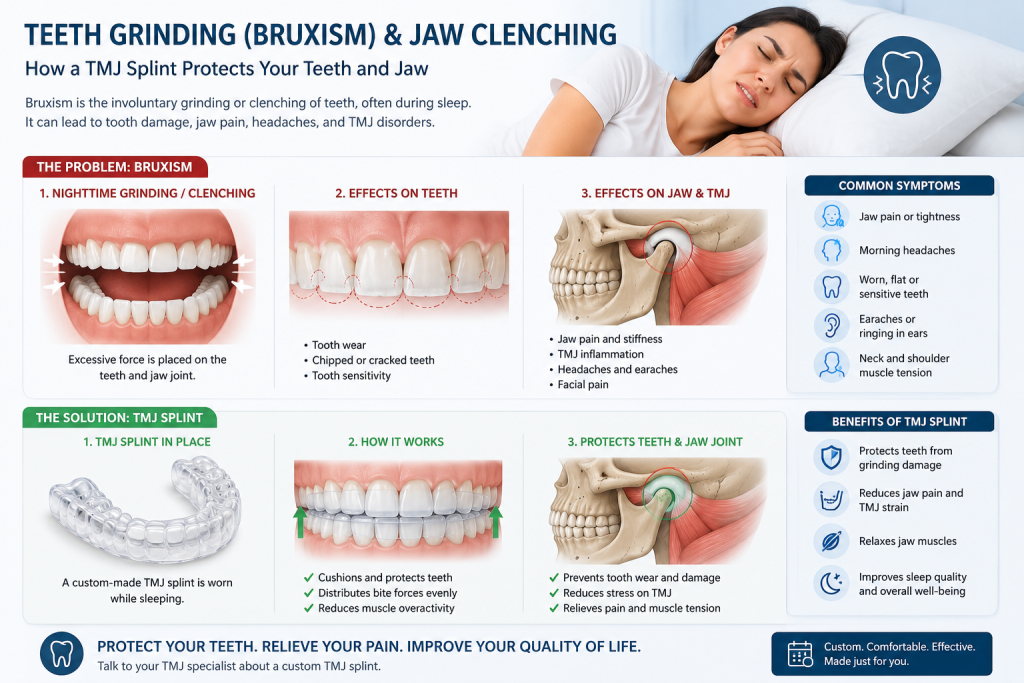
A TMJ splint creates a stable and balanced bite, allowing the jaw muscles and joints to function more comfortably. By reducing excessive pressure on the temporomandibular joint, the splint helps decrease inflammation and prevents further damage caused by clenching or grinding.
It can also protect your teeth from wear while giving the jaw adequate time to heal.
Who Needs TMJ Splint Therapy?
Your TMJ Specialist may recommend TMJ Splint Therapy if you experience:
- Persistent jaw pain or tenderness
- Clicking or popping sounds while opening or closing the mouth
- Difficulty chewing food
- Limited jaw movement or jaw locking
- Frequent headaches or facial pain
- Neck or ear pain related to jaw movement
- Teeth grinding (bruxism), especially during sleep
- Uneven bite or jaw discomfort
Early diagnosis and treatment can prevent TMJ problems from becoming more severe.
Benefits of TMJ Splint Therapy
TMJ Splint Therapy offers several advantages, including:
- Reduces jaw pain and muscle tension
- Minimizes teeth grinding and clenching
- Protects teeth from excessive wear
- Improves jaw movement and function
- Decreases headaches associated with TMJ disorders
- Helps reduce jaw clicking and popping
- Non-invasive and reversible treatment
- Custom-made for a comfortable fit
Types of TMJ Splints
Depending on your condition, your TMJ Specialist may recommend different types of splints, such as:
Stabilization Splint
Designed to reduce muscle tension and protect teeth from grinding.
Repositioning Splint
Helps guide the jaw into a more comfortable position when necessary.
Night Guard
Often recommended for patients who grind or clench their teeth during sleep.
Your TMJ Specialist will determine the most suitable option after a thorough examination.
What Happens During TMJ Splint Therapy?
The treatment process usually includes:
- Comprehensive dental and TMJ examination
- Bite analysis and diagnosis
- Digital or physical impressions of your teeth
- Fabrication of a custom TMJ splint
- Splint fitting and bite adjustment
- Regular follow-up visits to monitor progress
How Long Should You Wear a TMJ Splint?
The duration varies depending on the severity of your condition. Some patients wear the splint only at night, while others may require daytime use as instructed by their TMJ Specialist.
Most patients notice improvement within a few weeks, although complete treatment may take several months.
Caring for Your TMJ Splint
To keep your splint clean and effective:
- Clean it daily using a soft toothbrush and mild soap.
- Avoid using hot water, which may distort the appliance.
- Store it in its protective case when not in use.
- Bring it to your follow-up appointments for evaluation.
Looking for TMJ Splint Therapy in Nepal?
If you’re experiencing jaw pain, teeth grinding (bruxism), jaw clicking, or difficulty opening your mouth, TMJ Splint Therapy may help relieve your symptoms. At The TMJ Clinic, Dr. Manoj Sah, a Ph.D. specialist in TMJ and Orofacial Pain, provides comprehensive evaluations and custom-made TMJ splints designed to improve jaw function and reduce discomfort.
For patients living outside Nepal, online consultations and personalized treatment planning are also available, making expert TMJ care accessible from anywhere.
Frequently Asked Questions
Is TMJ Splint Therapy painful?
No. The splint is custom-made to fit comfortably. Some patients may need a short adjustment period.
Can a TMJ splint cure TMJ disorder?
A splint does not permanently cure every TMJ disorder, but it significantly reduces symptoms, protects the teeth, and improves jaw function in many patients.
Can I wear my TMJ splint while sleeping?
Yes. Many patients are advised to wear their splint at night, especially if they grind or clench their teeth during sleep.
Is TMJ Splint Therapy better than surgery?
For many mild to moderate TMJ disorders, splint therapy is considered the first line of treatment because it is non-invasive and reversible. Surgery is generally reserved for severe cases when conservative treatments are unsuccessful.
Conclusion
TMJ Splint Therapy is a safe, effective, and non-surgical treatment for managing jaw pain, teeth grinding, and other TMJ-related symptoms. A custom-made splint can help relieve discomfort, improve jaw function, and protect your teeth from further damage.
If you are experiencing persistent jaw pain, clicking, or difficulty chewing, consult your TMJ Specialist for a comprehensive TMJ evaluation. Early treatment can help prevent complications and improve your overall quality of life.
